5 Minutes
Clarity
Are we solving the right problem?
What do we know,
and what are we assuming?

Residential Performance
For more than three decades, I have led teams across architecture and construction.
My work spans private homes, condominiums, and rental apartments. I bring owners,
designers, and builders together to anticipate problems, make timely decisions, and
keep projects aligned with the owner’s priorities. I am based in South Florida.
I have seen a small detail on a drawing become costly rework on site. I have also seen one timely conversation prevent a problem altogether. Those moments taught me to bring different perspectives together while there is still time to change the answer.
I developed the 5-5-5 System to make important decisions clearer and more transparent.
5 Minutes
Are we solving the right problem?
What do we know,
and what are we assuming?
5 Months
What will this decision do to execution?
Cost. Schedule. Quality.
People. Operations.
5 Years
What value will this decision leave behind?
Product. Experience. Culture.
Reputation. Asset value.

Exceptional residential projects require more than great design and construction. They require experienced leadership, thoughtful decisions, and someone looking at the entire picture.
My role is to connect design, construction, cost, schedule, and quality, anticipating challenges, bringing clarity to complex situations, and protecting the owner’s vision from concept through completion.
Good leaders solve problems.
Great leaders seek them out before they become costly.
I care deeply about how clients experience the work, from the first conversation through the final details. I build teams that listen carefully, anticipate needs, communicate clearly, and follow through. That commitment shapes the culture, guides innovation, and earns the trust that helps a business grow.
My experience includes leading teams of up to 300 people, responsibility for projects valued at up to $400 million, and overseeing operations, client relationships, and business growth.
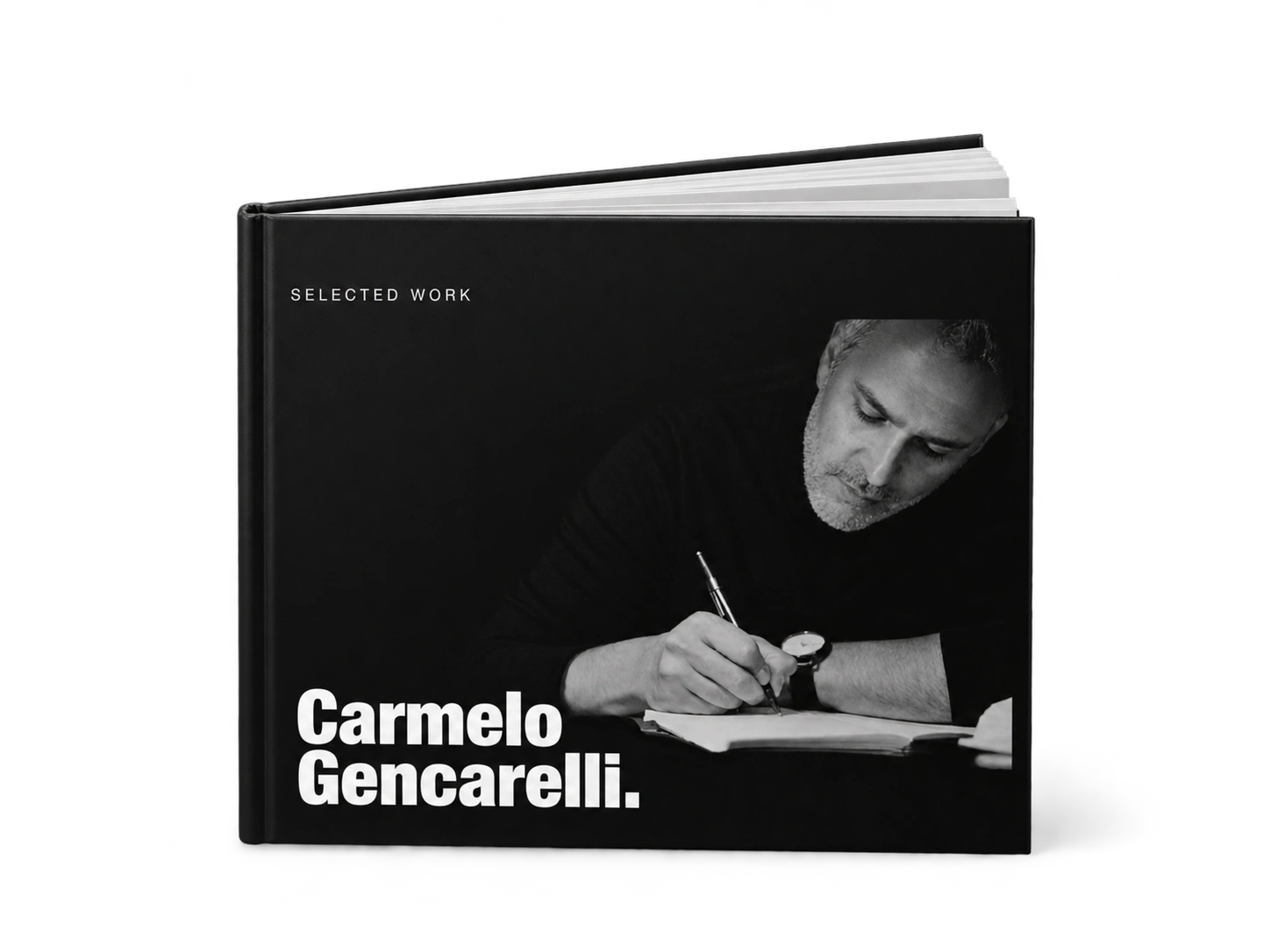
My portfolio book brings together selected projects and the work behind them. To respect my clients’ privacy, I share it personally. If you’d like a printed copy, email me your name and mailing address, and I’ll arrange for it to be sent directly to you.
Request my portfolioThe assumptions worth challenging
I’m a recovered contrarian. Experience taught me to question familiar answers and care more about outcomes than being different.
Problems found during construction often begin with decisions made much earlier.
How alignment, clarity, and early decisions shape long-term asset performance.
Most people misunderstand the owner’s representative.
They think the role is to protect schedule, budget, and construction. Those responsibilities matter.
But the strongest owner’s representatives protect something even more valuable.
They protect the quality of the decisions that shape the project long before problems become visible.
Projects rarely fail because people stop working. They underperform because hundreds of small decisions slowly drift away from the owner’s original intent.
By the time those decisions become visible in the field, correcting them is slower, more expensive, and far more disruptive.
The owner’s representative exists to reduce that drift.
A project’s performance is determined long before it is completed.
It begins with decisions. Those decisions create alignment. Alignment shapes execution. Execution shapes the final product. And the final product determines how the project performs over time.
Many problems discovered in the field are not created there. They reveal the quality of decisions made earlier.
Good leaders solve problems.
Great leaders seek them out before they become costly.
Most people assume an owner’s representative solves problems.
The best ones prevent many of them from happening. That does not happen through authority. It happens through observation.
An experienced owner’s representative develops pattern recognition over time.
They notice when assumptions remain untested.
They recognize coordination gaps before disciplines diverge.
They ask difficult questions while options still exist.
They challenge decisions before they become expensive commitments.
The objective is not simply to move the project faster. It is to move it forward with greater clarity.
Modern development is one of the most collaborative businesses in the industry.
Owners. Architects. Engineers. Contractors. Consultants. Operators. Vendors.
Each group is highly capable. Each views the project through a different lens.
Without strong alignment, those perspectives slowly begin to separate.
The consequences rarely appear all at once. They accumulate through coordination breakdowns, scope confusion, delayed decisions, operational friction, quality compromises, and long-term maintenance burdens.
Most of these problems are not construction failures. They are decision failures that simply become visible during construction.
My years as an owner’s representative shaped the way I think. They taught me that protecting execution is important.
But improving execution begins even earlier. It begins by improving the quality of the project decisions themselves.
The experience reinforced a broader principle: stronger outcomes begin with stronger decisions made earlier.
How can better decisions made early create stronger project outcomes later?
The strongest projects are not protected only through excellent execution. They are protected by making stronger decisions before execution begins.
This matters because projects have become significantly more complex. Buildings and systems are more integrated. Expectations continue to rise. Operating performance matters more than ever. Coordination demands are increasing. In that environment, technical execution alone is no longer enough.
Organizations that consistently outperform are not simply better builders. They are better decision makers.
An owner’s representative cannot eliminate every challenge. No one can. But they can dramatically improve the quality of alignment, communication, accountability, and decision making throughout the life of a project.
That is why I have never viewed the role as construction oversight. I have always viewed it as performance protection.
Because in the end, the field does not create outcomes. It reveals the quality of earlier decisions.
Carpe diem,
Carmelo
The greatest risks often emerge between disciplines.
Why the greatest risks often emerge between disciplines.
Many of the most expensive problems in residential development do not begin within one discipline.
They emerge between them.
Between strategy and design. Design and construction. Construction and operations. The original vision and what is ultimately delivered.
Each team may perform its role well. The owner or developer defines the vision. The architect and interior designer shape the spaces. Engineers resolve the systems. The contractor focuses on cost, schedule, and constructability. In multifamily development, operations and marketing bring additional perspectives.
Yet the project can still underperform.
The problem is not always a lack of expertise, effort, or accountability. It is that critical decisions often fall into the spaces no one fully owns.
A floor plan may satisfy the program and area requirements but create furniture conflicts residents discover only after moving in.
A mechanical decision may appear efficient in isolation but compromise ceiling heights, lighting, or architectural intent.
In a custom home, the architecture, interiors, and engineering may each be carefully developed, yet a ceiling detail can still leave too little room for lighting, air distribution, or window treatments. Each specialist has addressed a different part of the room. Someone still needs to own how it all comes together.
A value-engineering change may reduce construction cost while weakening storage, flexibility, durability, or the experience being marketed.
An operational concern may surface after the design is already advanced, when addressing it requires redesign, added cost, or compromise.
None of these decisions necessarily looks significant when considered separately. In a private home, the consequences can affect the way a family lives every day and require costly changes to finished work. In multifamily development, a small weakness can become a portfolio-wide problem when multiplied across units, floors, buildings, and years of operation.
By the time the consequences become visible, the original decision may be months or years behind the project.
The cost does not appear only as a change order. It may show up as schedule pressure, market resistance, complaints, higher maintenance, operational friction, or a final product that simply does not perform as well as it should.
Most projects have coordination meetings, review processes, consultants, schedules, and approval procedures. These are necessary, but they do not always create ownership of the complete outcome.
Coordination asks whether the disciplines are communicating.
Ownership asks whether the final decision strengthens the project as a whole.
Those are not the same question.
A drawing can be coordinated and still produce an average living experience. A product can meet the budget and still create operational friction. A project can reach completion and still fall short of the promise that originally justified the investment.
Ownership requires someone to look beyond the boundaries of individual disciplines and ask:
Does this decision support the original strategy?
Can it be built without unnecessary cost or complexity?
Will it work operationally?
Will residents understand and value it?
Will it continue performing after the project team is gone?
These questions are often discussed, but they are not always carried consistently from the earliest concept through delivery and operation.
When something goes wrong, organizations naturally look for the person or team responsible. Sometimes that is necessary. But many recurring problems are not individual failures. They are the result of how responsibilities are divided.
Architecture, construction, development, marketing, and operations each see the project through a different lens. That specialization is valuable. The risk appears when no one is accountable for connecting those lenses early enough to influence the outcome.
The solution is not another layer of review or a longer list of approvals. More process can create the appearance of control while slowing decisions and weakening responsibility.
What is needed is clear cross-functional ownership from someone with the experience, authority, and judgment to connect project intent with design, constructability, cost, schedule, operations, resident experience, and long-term asset performance.
That responsibility cannot begin during construction, when many important choices have already been made. It must start upstream, while the product is still being defined and meaningful options remain available.
For much of my career, I have worked in the spaces between disciplines.
I have seen how early decisions affect construction months later, how design intent can be weakened through delivery, how operating realities expose assumptions made during development, and how resident experience is shaped by details that may never appear in a financial model.
The opportunity is not to eliminate every problem. Residential development is too complex for that.
The opportunity is to identify the decisions with the greatest downstream consequences, bring the right perspectives together earlier, and ensure that someone remains responsible for the complete outcome.
That is where better performance begins.
Not with more ideas.
Not with more meetings.
Not with another specialist focused on one part of the process.
It begins when someone owns what happens between the experts.
Because the most expensive problems are often not the ones nobody saw.
They are the ones everybody saw, but nobody owned.
Carpe diem,
Carmelo
Design quality and delivery discipline belong together.
Great design should challenge the team.
Great design should not force the field to finish the thinking.
Too often, unresolved details, coordination gaps, late decisions, and value-engineering changes arrive on the job site disguised as construction problems.
But many of them began much earlier.
When the field repeatedly has to resolve design decisions, it is worth asking what could have been clarified earlier.
For developers, that means bringing constructability into design earlier.
For architects, it means recognizing that great design includes execution, not just intent.
For contractors, it means understanding that some field problems are symptoms, not root causes.
And for owners, late decisions almost always cost more than early discipline.
That does not mean design should become cautious or ordinary.
It means ambition and constructability have to coexist.
The strongest teams ask the hard questions early:
Can this be built clearly?
Are the critical details resolved?
Will the design survive value engineering?
Are we solving the problem now, or pushing it downstream?
Because every unresolved decision eventually lands somewhere.
Usually on the job site.
And by then, it costs more.
More money. More time. More tension. More compromise.
Great design is not only what gets drawn.
It is what can be built exceptionally well.
Carpe diem,
Carmelo
Every decision has more than one consequence.
Every decision has more than one consequence. Here’s a simple way to think about them.
I’ve been thinking about how we make important decisions.
Not just whether a decision is right or wrong, but what happens after we make it.
Throughout my career, I’ve seen decisions that made perfect sense in the room create problems months later. I’ve also seen teams spend enormous amounts of time solving problems that could have been avoided if someone had asked a different question earlier.
That led me to a simple way of thinking about decisions.
5 minutes. 5 months. 5 years.
I call it the 5-5-5 System.
Are we solving the right problem?
Before making an important decision, I want to understand the objective, the facts, the assumptions, the people affected, and whether we are addressing the real problem.
Sometimes five minutes spent asking better questions can prevent months of unnecessary work.
Five minutes doesn’t mean making the decision in five minutes. It means making sure we’re solving the right problem before spending five hours on the answer.
What will this decision do to execution?
This is where decisions become real.
What happens to cost? Schedule? Quality? Coordination? People? Operations?
A decision that looks simple on paper can create complexity somewhere else. And a decision that saves money today can become surprisingly expensive once it reaches construction or operations.
The question is not only, “Can we do this?” It is also, “What will happen because we do this?”
What value will this decision leave behind?
Some decisions solve today’s problem but quietly compromise tomorrow’s product.
Five years forces us to look beyond immediate execution.
What does the decision mean for the customer or resident? The product? The team? The culture? The reputation of the organization? The long-term performance of the asset?
Not every decision requires a five-year discussion. But important ones deserve that perspective.
There is another reason I like 5-5-5. It creates a shared language for the team.
When people understand the problem being solved, the assumptions behind the decision, the expected impact on execution, and the long-term objective, decision-making becomes more transparent.
And accountability becomes different.
Five months later, instead of asking: Who made this decision?
We can ask: What did we believe when we made it? What actually happened? What did we learn?
That is a much more valuable conversation. It creates accountability without turning accountability into blame. It also gives teams an opportunity to learn from decisions rather than simply defend them.
The 5-5-5 System isn’t intended to make decision-making complicated. Quite the opposite.
It is simply a reminder to consider what an important decision means now, during execution, and over time.
5 minutes. Clarity.
5 months. Performance.
5 years. Value.
Because a great decision shouldn’t only make sense when we make it.
It should continue to make sense after we live with it.
Carpe diem,
Carmelo
Question what is familiar before repeating it.
Why experience should guide the work, not end the conversation.
Over Labor Day weekend, I heard Sir James Dyson explain why too much experience can sometimes get in the way of better thinking.
One example stayed with me: he often recruits people straight out of school rather than people with years of experience.
His reasoning was simple: experienced people naturally reach for solutions that have worked before. Inexperienced people are less constrained by what is supposed to be done. They may see possibilities that others no longer notice.
I understand exactly what he means.
Throughout my career, I have believed in hiring first for attitude and second for credentials.
A resume can tell me what someone has already done. It cannot tell me how that person will respond when the answer is unclear.
Will they take ownership?
Will they listen and learn?
Will they challenge an assumption respectfully?
Will they care enough to ask one more question?
Is there a better way?
Credentials matter. Experience matters. In architecture, construction, and real estate development, poor judgment can create serious consequences. Budgets, schedules, quality, safety, and client trust cannot become uncontrolled experiments.
But experience should guide the work. It should not end the conversation.
When experience becomes the only qualification that matters, companies often reproduce the same thinking they already have. People learn how things are done, but eventually stop asking why they are done that way.
That is where inexperience can become valuable.
Someone encountering a problem for the first time may question what everyone else has accepted. They may not know the conventional solution, so they begin somewhere different. Sometimes the idea will be impractical. Sometimes it will expose an opportunity that years of repetition have made invisible.
The answer is not to choose between experience and inexperience.
It is to combine them intelligently.
Inexperience becomes an advantage when people are given context, clear boundaries, access to experienced judgment, and permission to question the obvious. New ideas can be tested before they are scaled. Mistakes can become learning without becoming disasters. Experienced leaders can identify risk without automatically protecting the status quo.
The experienced professional sees what could go wrong.
The fresh thinker sees what could be different.
A strong organization needs both.
Robert Brunner, from Apple, saw something similar when he encountered a young Jony Ive. What caught his attention was not a long resume, but the depth of the work, the curiosity behind it, and the way Ive had already thought through how things would actually be made.
The best leaders do not only evaluate what someone has already done. They recognize what that person may be capable of becoming.
This is also why I believe attitude matters so much. Skills can be developed. Processes can be taught. Every new employee, regardless of experience, must still learn the company, its clients, its culture, and the particular challenge in front of them.
Curiosity, humility, ownership, and the desire to improve are much harder to create.
Companies do not become innovative because they talk about innovation. They become innovative when their people are encouraged to question what already exists and are given the discipline to turn better ideas into better outcomes.
Is there a better way?
It is a simple question.
But when the right people are allowed to ask it, and experienced leaders are willing to listen, it can change a team, a product, and sometimes an entire company.
Carpe diem,
Carmelo
Care, curiosity, and pride in the work shape the outcome.
My father was a builder.
Growing up, I watched him approach his work with a level of care that I did not fully understand at the time.
It wasn’t about perfection.
It was about dedication.
Showing up. Paying attention. Caring about details other people might never notice. Doing something again when you knew it could be better.
Over the years, I began to understand what he was teaching me:
Dedication is what turns work into craft.
And craft is not limited to people who build things with their hands.
There is craft in architecture.
There is craft in construction.
There is craft in developing a building, leading a team, solving a difficult problem, building a relationship, or creating a business.
You can usually recognize it.
Someone has gone beyond simply completing the work.
They have thought about it.
Questioned it.
Improved it.
They cared about the outcome even when nobody was watching.
That distinction matters.
We talk a lot about talent and experience. Both matter.
But I have met enormously talented people who stopped being curious. Experienced people who began relying too much on what had worked before. And organizations where completing the process became more important than improving the result.
Craft requires something else.
It requires giving a damn.
About the work.
About the people affected by it.
About whether what you are creating could be better.
That does not mean chasing perfection. Perfection can become its own problem.
It means having enough pride in the work to ask one more question, solve one more detail, and make one more improvement when it matters.
After more than three decades in this business, I still believe experience is valuable.
But experience tells us what we know.
Dedication determines what we do with it.
And perhaps that is what my father understood all along.
The best work is rarely the result of talent alone.
Dedication is what turns work into craft.
Carpe diem,
Carmelo
Rethinking the Space We Call Home.
Rethinking the Space We Call Home.
Some of the most important things I have learned about apartments came from touring communities, sitting in residents’ living rooms, and truly hearing the stories behind their living needs.
What works. What frustrates them. What they have quietly adapted to.
And what they wish someone had thought about differently before the apartment was built.
Those conversations changed the way I look at a floor plan.
I began paying as much attention to what people had learned to live around as to what they said they liked.
We are resourceful. We rearrange furniture, find another place for our belongings, and adjust our routines. Eventually, those adjustments become familiar enough that we stop questioning them.
But getting used to something does not mean it works well.
Sometimes, it simply means we have stopped expecting something better.
Consider one apartment at three moments in the same day.
In the morning, someone is making coffee while another person gets ready to leave. A child needs breakfast. Someone needs a quiet place for a call.
The kitchen, the circulation, the storage, and the relationship between rooms all become part of that morning. Decisions made months or years earlier now influence whether the day begins comfortably or with people getting in each other’s way.
By afternoon, the apartment has another job.
Someone is working. Someone else wants to rest. The dining table may have become a desk, with everything that comes with it: a screen, papers, cables, and a chair chosen for dinner rather than several hours of work.
The apartment has enough square footage on paper. The question is whether that space supports what is happening inside it.
Then evening arrives.
Work should be over. Dinner is being prepared. Perhaps friends are coming. Perhaps someone wants company while another person needs privacy.
Can the apartment accommodate those different needs? Can the workday be put away? Is there a comfortable place to gather without taking over the entire home?
The floor plan has not changed. Life has.
That is where interior architecture becomes powerful.
The position of a door. The depth of a closet. A useful stretch of wall. The distance between a table and the path people need to walk. A place to work that does not permanently occupy the place to eat.
These decisions rarely become the headline of a residential project. Yet residents encounter their consequences every day.
A beautiful lobby can make a memorable first impression. A thoughtful apartment can make an ordinary Tuesday easier.
Both matter. But the apartment deserves the same deliberate attention we give to the spaces we photograph and promote.
I understand why residential development relies on repeatable plans. Repetition can support cost control, coordination, and efficient delivery. Every project also has real constraints: structure, plumbing, accessibility, site conditions, and budget.
The question is what we choose to repeat.
A plan’s familiarity tells us that it has been used before. It does not tell us how well people live in it.
Before repeating it again, we should ask what the last residents taught us.
Where did furniture fit comfortably? Where did daily routines compete for the same space? What became difficult once the model furniture was replaced by someone’s actual belongings?
And which compromises could have been addressed while the apartment was still a drawing?
Residents can help us understand those questions. But listening requires more than asking whether they are satisfied.
Someone may say they need a larger apartment when what they need is better storage, more privacy, or a room that accommodates furniture without obstructing movement.
Someone may never mention dining with friends because they have already decided their home cannot support it.
People cannot ask for an apartment they have never experienced.
Their feedback gives us a starting point. Our responsibility is to understand the need behind it, explore possibilities, and test whether a different decision would make living easier.
That does not mean every apartment needs more space or more features. Adding something has consequences. A built-in costs money. A flexible space must actually be usable. Improving one area may require a compromise somewhere else.
The work is to make those choices carefully—and to know what they give the person who will live there.
That is what I mean by an uncommon apartment.
A home where ordinary needs received enough attention to produce a distinctive living experience.
Where someone can finish work and have dinner without reorganizing their life. Where storage has a purpose. Where privacy is considered. Where inviting people over feels possible.
Its distinction may be difficult to describe during a brief tour. Over time, however, the resident feels it.
In the morning. In the afternoon. In the evening.
We cannot design away every inconvenience. But we can stop treating familiar compromises as inevitable.
What have we been asking residents to live around that we could have designed differently?
For me, that is where the uncommon apartment begins.
Carpe diem,
Carmelo
The real skill is knowing which assumptions deserve to be challenged.
I know what you’re thinking: recovered from what?
From believing that challenging the answer was the same as improving it.
For much of my career, I’ve had a natural tendency to question things.
Why do we do it this way?
Who decided this was the best solution?
What happens if we look at the problem differently?
Earlier in my career, I probably thought being contrarian was part of the value. Challenge the assumption. Push against convention. Find another answer.
After more than three decades, I see it differently.
Being different is not the point. Better outcomes are.
There are plenty of established ways of doing things that work exceptionally well. Experience matters. Proven processes matter. Sometimes the conventional answer is conventional for a very good reason.
The real skill is knowing which assumptions deserve to be challenged.
That requires curiosity, but it also requires judgment.
In development, design, construction, and operations, I’ve seen enormous amounts of energy spent solving problems that might have been avoided if someone had asked a better question earlier.
Not: How do we fix this?
But: Why are we doing it this way in the first place?
That distinction has become increasingly important to me.
Challenging an assumption shouldn’t be an act of rebellion. It should be an act of responsibility.
Sometimes the answer is: No. There isn’t a better way. Keep going.
And that’s a perfectly good answer.
But occasionally, one question exposes an opportunity to simplify something, improve the product, reduce risk, make someone’s life easier, or create more value.
Those are the moments worth looking for.
Over time, I’ve developed a simple test before challenging an established way of doing something.
What problem am I trying to solve?
Is the current approach actually wrong, or is it simply different from the way I would do it?
And most importantly, will the alternative create a better outcome?
If I can’t answer that last question, I probably don’t need to challenge it.
Experience should make us better at questioning assumptions, not more attached to our own answers.
That may be the biggest lesson I’ve learned from being a recovered contrarian.
When I was seventeen, my uncle gave me a question that has followed me throughout my career:
Is there a better way?
It took me many years to understand that the power wasn’t in always answering yes.
The power was in being willing to ask.
Carpe diem,
Carmelo
The problem in front of you is often not the real problem.
One thing I’ve learned over the years is that the problem in front of you is often not the real problem.
A construction issue may have started with a design decision months earlier.
A cost problem may have started with an assumption that was never challenged.
An operational issue may go all the way back to development.
And sometimes a growth problem has very little to do with sales.
That is why I’ve become more interested in asking a simple question:
What is really getting in the way?
Not just, what is going wrong?
But what is actually preventing the project, the team, or the organization from moving the way it should?
Sometimes the answer is obvious.
Often it isn’t.
It may be a decision that came too late. A lack of clarity. A process that no longer makes sense. Two teams working toward different priorities. Or simply too much attention being spent on the visible problem instead of where it began.
I’ve seen this many times throughout my career.
More meetings get added.
More people get involved.
More technology is introduced.
Everyone gets busier.
And somehow the real issue is still sitting there.
The better approach, in my experience, is usually to look upstream.
Where did this start?
What assumption created it?
What decision was avoided?
What could have been handled earlier?
That does not mean every problem can be prevented. Of course not.
But many problems become expensive because they are discovered late.
That is probably the biggest lesson for me:
The earlier you understand the real issue, the more options you still have.
And that applies to projects, organizations, and people.
Sometimes progress does not come from doing more.
It comes from finally addressing the right thing.
Carpe diem,
Carmelo
People cannot ask for an apartment they have never experienced.
The most valuable residential insights often exist before residents can describe them.
Most residential innovation begins with the same question:
“What do residents want?”
It sounds reasonable.
Developers conduct surveys. Property managers collect feedback. Marketing teams analyze trends. Operators study online reviews.
All of this information matters.
But there is a problem.
It mostly tells us what residents experienced yesterday.
It rarely reveals what they will quietly value tomorrow.
The distinction matters.
If BlackBerry had asked its customers how to build a better phone, they probably would have heard:
“Make the keyboard a little better.”
Few people would have imagined removing the keyboard altogether.
Apple did not ignore its customers.
It simply understood something deeper than their requests.
It recognized needs people were already feeling but could not yet describe.
Residential development faces the same challenge.
If we only improve what residents already complain about, we make better versions of yesterday’s apartments.
Real innovation asks a different question.
What will improve everyday living, even if residents have never thought to ask for it?
That question cannot be answered by surveys alone.
It requires judgment.
LivingNEXT was never built from market research alone.
It emerged from thirty-five years spent watching decisions become buildings, apartments, resident experiences, operating realities, and long-term asset performance.
It was shaped by architecture, residential development, construction, owner-side execution, operations, apartment renovations, community visits, conversations with residents, and watching thousands of decisions succeed or quietly fail.
Over time, certain patterns became impossible to ignore.
Many of the problems that appear during construction are not construction problems.
Many of the frustrations residents experience are not resident problems.
Many operational challenges begin years before operations ever take over.
They begin with product decisions made upstream.
Those observations became the foundation of LivingNEXT.
One misconception about innovation is that it begins with answers.
I believe it begins with better questions.
Experience creates the hypothesis.
Observation reveals the patterns.
Resident feedback either validates or challenges the conclusions.
Better residential decisions emerge from all three.
Resident feedback remains essential.
But it should strengthen judgment, not replace it.
Leadership is not simply listening.
Leadership is recognizing what people will value before it becomes obvious to everyone else.
The best residential decisions are often invisible.
Residents rarely walk into an apartment and say:
“The storage layout reduced my daily friction.”
They simply enjoy living there.
They rarely notice thoughtful electrical planning, better furniture placement, quieter mechanical systems, intuitive kitchens, or spaces that adapt as life changes.
They simply feel that the apartment works.
That is the goal.
Not to create memorable features.
To create places that quietly perform every day.
Resident surveys improve operations.
They identify problems.
They reveal opportunities.
They help measure satisfaction.
They should absolutely remain part of the process.
But they cannot become the entire process.
Because by the time everyone agrees something is important…
it is no longer innovation.
It has become the new standard.
The opportunity is to recognize tomorrow’s expectations before they become today’s complaints.
That is where better residential products begin.
That is what LivingNEXT is trying to explore.
Carpe diem,
Carmelo
When decisions stall, cost, schedule, and accountability drift.
When decisions stall, cost, schedule, and accountability begin to drift.
Even sound decisions lose value when they arrive too late.
By the time direction is confirmed, sequencing has shifted, procurement windows have narrowed, and coordination has already absorbed uncertainty.
Delay compounds.
Not dramatically. Quietly.
Unresolved decisions do not stay contained.
They ripple.
They show up as:
Each instance feels manageable.
Together, they create structural drift.
Rarely incompetence.
More often, structure.
When priorities aren’t explicit, hesitation becomes institutional.
Execution absorbs the friction.
Decision delay erodes more than schedule.
It erodes:
By the time pressure is visible in the field, the underlying issue is no longer tactical.
It is structural.
What decisions reduced uncertainty this week?
If the answer is mostly status updates rather than resolved trade-offs, latency is building.
And latency compounds.
Performance is shaped not only by what you decide.
It is shaped by how long you allow uncertainty to persist.
High-performing teams design decision velocity.
Not recklessly.
But deliberately.
Decision quality matters.
But decision timing determines whether quality still has time to matter.
Carpe diem,
Carmelo
Downstream performance begins with upstream judgment.
Many resident complaints are not created by property management.
They are inherited.
That distinction matters.
By the time a resident moves in, hundreds of decisions have already been made about the apartment, the building, the systems, the finishes, and the way everything comes together.
Some of those decisions improve the resident experience.
Others quietly create problems that operations will eventually have to manage.
A layout decision that makes furniture placement difficult.
A value-engineering change that saves money during construction but creates maintenance issues later.
A substituted material that looks similar on paper but performs differently after a year of use.
A coordination issue that seemed minor during construction but becomes an everyday frustration for residents.
A field compromise that solved an immediate problem without considering what it would mean after move-in.
None of these decisions may look significant when they are made.
But once the building is occupied, operations lives with the consequences.
And the resident usually does not know where the problem started.
They simply call property management.
The complaint becomes an operations issue.
The service request becomes an operations cost.
The frustration becomes an operations relationship to manage.
And if the problem happens often enough, it can eventually affect reviews, renewals, staffing, maintenance expenses, and the reputation of the property.
But the real decision may have been made months, sometimes years earlier.
This is why I believe residential development and operations should never be treated as completely separate worlds.
The decisions made during development eventually become the operating reality of the asset.
The strongest residential organizations understand this.
They ask operations questions before operations begins.
How will this material age?
How will this detail be maintained?
What happens when something breaks?
Will residents understand how to use it?
Will this decision create recurring service calls?
Are we solving a construction problem today by creating an operating problem tomorrow?
Those questions are not about slowing development down.
They are about making better decisions while there is still time to change them.
Because once hundreds of residents move in, the opportunity to redesign the problem is usually gone.
Operations can manage it.
Operations can respond to it.
Operations can sometimes improve it.
But operations cannot always undo it.
Better residential performance begins when development understands that someone downstream will eventually live with every decision made upstream.
Sometimes that person is the resident.
Sometimes it is the property manager.
Usually, it is both.
Carpe diem,
Carmelo
Residential performance begins with decisions made upstream.
Why residential performance begins with the quality of decisions made upstream.
Every residential building is the physical expression of thousands of decisions.
Some of those decisions create lasting value.
Others quietly create years of operational friction.
The difference rarely begins during construction.
It begins long before the first line is drawn.
Residential performance is often judged after the building is complete. Leasing velocity, sales absorption, resident satisfaction, maintenance patterns, turnover, operating costs, reputation, and asset value all become visible later.
But by the time those outcomes appear, many of the decisions that shaped them have already been made.
The floor plans have been repeated.
The unit mix has been established.
The apartment layouts have been accepted.
The storage assumptions have been embedded.
The furniture logic has gone unchallenged.
The mechanical, electrical, plumbing, and structural decisions have been coordinated around a plan that may not have been fully questioned.
The value-engineering process has protected some things and weakened others.
Then the building opens, and the market begins to respond.
Residents do not experience a pro forma. They experience the apartment.
They experience how the door swings, where the bed fits, whether the dining area works, how storage supports daily life, how easily furniture can be placed, whether the kitchen feels intuitive, whether work-from-home was seriously considered, and whether the unit feels natural or compromised.
Operations feel those decisions too.
A small apartment decision can become a service request.
A storage weakness can become daily dissatisfaction.
A furniture conflict can become leasing friction.
A difficult maintenance condition can become recurring cost.
A design assumption can become a repeated operational burden.
At scale, small residential decisions do not stay small.
They become product characteristics.
That is why the earliest decisions deserve more attention than they often receive.
Residential development has become highly sophisticated around capital, branding, amenities, technology, construction delivery, and operations. But the apartment itself is still too often repeated from familiar assumptions before it is fully challenged.
Repetition is not the problem.
Residential development depends on repetition. Repetition creates efficiency, consistency, purchasing power, operational clarity, and financial predictability.
The problem begins when decisions are repeated before they are properly questioned.
A weak decision in one apartment may be manageable.
The same weak decision repeated across hundreds of units becomes a product issue, an operating issue, and eventually an asset-performance issue.
Better residential outcomes do not require dramatic change. They require better judgment earlier.
Before plans are repeated.
Before coordination makes change expensive.
Before value engineering weakens the living experience.
Before the field reveals what should have been challenged upstream.
Before residents and operators inherit decisions they did not make.
This is where residential performance begins.
Not only in construction.
Not only in operations.
Not only in branding.
Not only in amenities.
It begins in the quality of decisions made before the project becomes difficult to change.
The strongest residential organizations understand this. They do not treat the apartment as a static design deliverable. They treat it as a living system, an operational interface, and a component of long-term asset performance.
They ask better questions earlier.
How will people actually live here?
What assumptions are we repeating?
Where will daily friction appear?
What will operations inherit?
Which decisions create value, and which quietly create risk?
What looks efficient on paper but may not perform in real life?
Where does design intent need stronger protection through execution?
These questions are not cosmetic.
They are strategic.
Because what gets built reflects the quality of the decisions behind it.
And once those decisions are built, they become daily life for residents, daily responsibility for operators, and long-term reality for owners.
Better places to live begin with better decisions made earlier.
That is where residential performance begins.
Carpe diem,
Carmelo
Better living begins by questioning what has become normal.
What if we expected more from the places we call home?
Recently, I listened to Will Guidara talk about the thinking behind Unreasonable Hospitality. One idea stayed with me: creating an experience that goes beyond what people normally expect.
It made me think about residential living.
What would Unreasonable Living look like?
Not unreasonable in terms of luxury, cost, or excess.
Unreasonable in the amount of thought we put into understanding how people actually live.
After thirty-five years working across architecture, construction, residential development, operations, and owner-side execution, I continue to see an interesting contradiction:
We have become extraordinarily sophisticated at creating buildings. But I am not convinced we have become equally sophisticated at creating places to live.
While these ideas can apply across many forms of residential housing, they are especially relevant wherever limited space magnifies the consequences of every product decision.
Residential development has changed enormously.
We have better technology, materials, finishes, amenities, wellness programs, coworking spaces, package rooms, rooftop pools, pet facilities, and apps that allow residents to manage almost everything from their phones.
All of this has value.
But eventually, the resident closes the apartment door.
That is where living begins.
The apartment is where someone wakes up, makes coffee, gets dressed, works, cooks, exercises, entertains friends, raises children, stores the accumulated pieces of life, rests, and eventually goes to sleep.
Yet apartments are still too often evaluated through square footage, unit mix, efficiency, rent, finishes, and whether the floor plan technically works.
A floor plan can work on paper and still create friction every single day.
The quality of a home is often revealed through 12 very ordinary questions.
1. Where do I put the groceries when I walk in?
2. Can two people actually use the kitchen together?
3. Why does the kitchen consume so much of the living area while there is nowhere comfortable for a dining table?
4. Can I have friends over without rearranging the apartment?
5. Where do I work from home?
6. Where does the vacuum cleaner go?
7. Where do I store luggage, sports equipment, or the things I don’t use every day?
8. Can two people use the bathroom with some privacy?
9. Can my furniture actually fit?
10. Does a 1,000-square-foot apartment feel like 1,000 square feet?
11. Does daylight reach the places where I spend my day?
12. Could someone with different physical abilities live here comfortably?
These are not extraordinary expectations.
They are ordinary life.
Yet versions of these same frustrations appear repeatedly across residential communities, regardless of market, brand, or finish level.
That should tell us something.
A decision made once during planning can affect someone’s life every day for years.
Move a wall a few inches and furniture may work differently.
Change the relationship between the kitchen and living area and the entire apartment can feel larger.
Create useful storage and everyday clutter becomes easier to manage.
Provide flexibility and the same space can accommodate work, exercise, guests, or changes in someone’s life.
Improve privacy, acoustics, daylight, or access to outdoor space and residents experience the benefit repeatedly.
These decisions may appear small on a drawing.
They are not small when multiplied across hundreds of apartments, thousands of residents, and decades of use.
That is why I believe the apartment itself should be treated as a performance metric, not simply a design deliverable.
Property management can solve many problems.
Maintenance can be improved. Service can improve. Technology can be upgraded. Policies can change. Amenities can be repositioned.
But operations cannot move a structural wall.
They cannot create daylight where none exists.
They cannot easily add storage after hundreds of units have been built.
They cannot fundamentally correct an apartment that feels smaller than its stated square footage, a kitchen that dominates the usable living area, inadequate bathroom privacy, poor furniture relationships, or a layout that does not adequately address accessibility.
Those problems are embedded in the product.
And once they reach operations, the most important opportunity to solve them has already passed.
Many recurring resident frustrations are actually upstream decisions showing up downstream.
That is why the conversation needs to begin earlier.
For years, residential differentiation has often focused on what else can be added to the building.
Another amenity.
Another service.
Another technology.
Another finish.
But perhaps one of the greatest opportunities for differentiation is already inside the apartment.
Not necessarily through more.
Through better.
Better use of space.
Better storage.
Better flexibility.
Better privacy.
Better daylight.
Better accessibility.
Better relationships between rooms.
Better understanding of how the intended resident actually lives.
Amenities help sell the building.
The apartment has to deliver the experience every day.
This is not simply a design argument.
When an apartment works better, residents feel it.
That experience can influence satisfaction, reviews, referrals, leasing conversations, renewals, and ultimately the resilience of the residential product.
Better upstream decisions can also reduce redesign, coordination problems, late changes, and expensive corrections during construction.
The resident experience and the business case should not be competing objectives.
At their best, they reinforce each other.
A better-performing apartment can create value for the resident, operator, developer, and long-term owner at the same time.
I have loved architecture since I was fifteen years old.
But after decades around buildings, I have become increasingly interested in a question that goes beyond architecture:
What happens to people after the architects, developers, and builders leave?
Buildings are completed.
Living continues.
That is where Unreasonable Living begins.
It means being almost unreasonable about understanding the resident.
It means questioning things we have repeated for decades simply because they became standard.
It means walking through an apartment mentally before building it physically.
It means asking not only whether the plan works, but whether life works inside the plan.
Unreasonable Living is not about extravagance.
It is not about perfection.
And it is certainly not about adding more for the sake of more.
It is about refusing to accept unnecessary friction in the place where people spend so much of their lives.
Because a great home should do more than contain life.
It should help life work better.
Carpe diem,
Carmelo
The greatest advantage in the age of AI may not be intelligence at all.
The greatest advantage in the age of AI may not be intelligence at all.
Every day, AI seems to cross another line that once felt impossible.
It writes books. Creates images. Designs products. Builds software.
For the first time in history, almost anyone can create almost anything.
That is extraordinary.
But it raises a bigger question:
If everyone can create, what becomes valuable?
Looking back over more than thirty-five years in residential development, the moments that mattered most rarely came from having more ideas.
They came from recognizing the one idea worth building.
The apartment layout that improved everyday living.
The small design decision repeated hundreds of times.
The cost-saving change that quietly weakened the resident experience.
I didn’t have a name for that ability then.
Today, I do.
Judgment.
AI will become remarkably good at generating possibilities.
Steve Jobs once described creativity as connecting things.
But connection is not the same as judgment.
The real advantage will not come from creating more.
It will come from recognizing which possibilities deserve to become reality.
Designers may call that taste.
Developers may call it judgment.
Whatever we call it, I believe it will become one of the most valuable human skills of the AI age.
AI can generate a thousand apartment layouts. It can compare cost, dimensions, circulation, daylight, and precedent.
But it has never lived in the apartment.
It has never watched a resident struggle with a poor decision.
It has never stood on a jobsite and seen an elegant idea become an expensive problem.
AI can help us create more.
It still cannot decide what is worth building.
That decision is still ours.
Carpe diem,
Carmelo
The people behind the perspective
My journey began in Buenos Aires and brought me to South Florida through São Paulo, Verona, and New York. Along the way, my father and one of my mentors shaped more than my career. They taught me to care about the work, invest in people, and earn trust through actions. Those lessons still guide how I lead today.
“Dream big. Be curious. Be kind.”— MY FATHER
Some of the biggest lessons of my career had very little to do with buildings. They came from the people around me and the way they taught me to look at the work.
My journey started in Buenos Aires, took me through Brazil and Italy, and eventually brought my family and me to New York more than two decades ago. In 2016, we moved to South Florida, where I continue to live and work today.
Moving to the United States with my family taught me not to take stability or opportunity for granted. I’m grateful for the life we’ve built here. That gratitude has never made me less ambitious. It has made me more determined to do meaningful work and make the most of the opportunities in front of me.
My father was an Italian builder who believed our work had the power to improve people’s everyday lives. Watching him, I learned that dedication is what turns work into craft. He also taught me that growth was never optional. We had a responsibility to keep learning, improving, and creating more value.
My mother taught kindness. My sister taught accountability. Long before I understood anything about business or architecture, they were already shaping the way I saw the world.
Early in my career, another mentor changed my perspective. Carlos, an incredible leader at one of Argentina’s pioneering advertising agencies, pushed me beyond architecture and construction. He introduced me to business development, positioning, and the importance of understanding the people behind every product or service.
One afternoon I asked him a simple question: “Carlos, what is a brand?”
He replied: “Carmelo, a brand is how you communicate the truth in a way that builds trust.”
That idea stayed with me.
In 1998, two years after we met, Carlos challenged me to look closely at how I made decisions. He pushed me to identify what was distinctive about my approach and make it clear enough for others to understand. That conversation helped shape what I came to call the 5-5-5 System.
The thinking had been taking shape through years of work. Carlos helped me recognize the pattern and put it into words. I have used and refined the system ever since.
When I was seventeen, my uncle, one of the most creative architects I’ve known, left me with a question that has guided me ever since.
“Is there a better way?”
It taught me never to accept decisions simply because they were familiar or already approved. Look again. Question assumptions. Search for the better answer before problems become permanent.
It also shapes how I lead. I hire first for attitude, curiosity, and potential, and second for credentials. Experience should guide the work, not end the conversation.
Every project, mentor, and conversation has shaped the way I think about the work today.
And one question still sits at the center of it all: Is there a better way?
A conversation worth having
The work that matters to me brings together better places to live,
stronger teams, and lasting property value. I’m always interested
in meeting people who share that ambition.